

Moving goods from one place to another is the heartbeat of any business. In India, under the GST law, the E-Way Bill is the most important document for this journey. If your vehicle is carrying goods worth more than ₹50,000, you almost always need this digital permit.
However, the rules are strict. Even a small slip-up can lead to your truck being stopped, your goods being locked up, and heavy fines being charged. This is where E-Way Bill Penalty & Detention Cases start. When your goods are stuck on the highway, your business stops, your customers get angry, and your money gets blocked.
At Jigar Malavaniya & Associates, we help business owners, transporters, and MSMEs handle these stressful situations. We ensure that your goods are released quickly and that you don’t pay more penalty than what is fair under the law.

Simple Explanation
What Are E-Way Bill Penalty & Detention Cases?
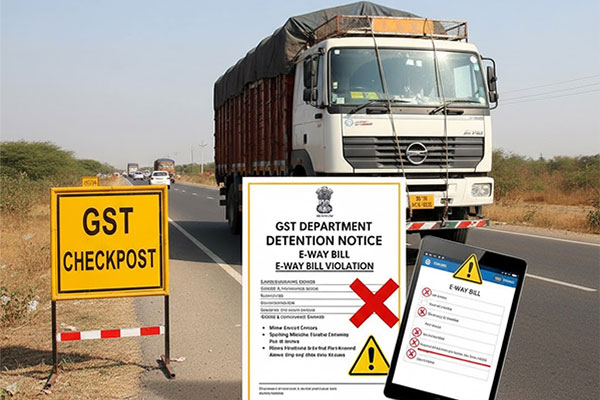
When a GST officer stops a vehicle and finds something wrong with the paperwork, it leads to E-Way Bill Penalty & Detention Cases. “Detention” simply means the officer has taken control of your vehicle and goods and will not let them move until the issue is resolved.
These cases usually happen because of:
- Missing E-Way Bills.
- Expired E-Way Bills.
- Wrong vehicle numbers.
- Difference between the items in the truck and the items listed in the invoice.
If your goods are detained, you receive a legal notice. Dealing with this requires a calm mind and a deep understanding of GST rules. A professional can help you prove that there was no “intention to evade tax,” which is the most important defense in these cases.
Our E-Way Bill Legal Services
E-Way Bill Detention & Goods Release Support
When goods are stuck on the highway, your business operations suffer. We act quickly to communicate with the department and help you get a lawful release in the shortest time possible.
E-Way Bill Demand Case Reply
An E way bill demand case creates an official liability on your GST portal if not handled properly. We draft strong replies to prove that taxes were already paid or that the mistake was accidental and not tax evasion.
E-Way Bill Detention & Goods Release Support
When goods are stuck on the highway, your business operations suffer. We act quickly to communicate with the department and help you get a lawful release in the shortest time possible.
E-Way Bill Demand Case Reply
An E way bill demand case creates an official liability on your GST portal if not handled properly. We draft strong replies to prove that taxes were already paid or that the mistake was accidental and not tax evasion.
E-Way Bill Penalty Defence Drafting
A strong E way bill penalty defence focuses on intent, nature of error, and correct legal penalty. We draft replies using the right words to protect you from excessive penalties.
Confiscation Case Urgent Handling
In an E way bill confiscation case, the department may proceed to take ownership and even auction goods if the matter is not addressed in time. We handle urgent representation to protect your goods and vehicle.
Minor Mistake & Typographical Error Penalty Reduction
For minor mistakes, penalty should generally be limited to ₹1,000 (₹500 CGST + ₹500 SGST). We help you prove clerical or typographical errors and challenge illegal 200% penalty demands.
End-to-End Case Support (Reply to Closure)
From the first notice to follow-ups and closure, we manage the paperwork, communication, and case strategy so you can focus on business continuity.
Common E-Way Bill Scenarios We Handle
Goods detained for e way bill mistake
It is very common to see goods detained for e way bill mistake. These are often human errors. Maybe the person typing the bill was in a hurry, or the internet was slow.
Common mistakes include:
- Selecting the wrong “Supply Type” (Export instead of Outward).
- Entering the wrong HSN code.
- Mixing up the Pin Codes of the source and destination.
When goods are detained for such mistakes, the officer often treats it as a major crime. However, the law says that for small mistakes, the penalty should be very low. We help you argue this point so you can get your truck back on the road.


Goods detained without e way bill
If your vehicle is caught moving goods detained without e way bill, the situation is difficult but not impossible. The law assumes that if there is no E-Way Bill, you were trying to sell goods “in black” without paying GST.
The penalty for moving goods without an E-Way Bill is usually 200% of the tax amount. However, if the owner comes forward, the calculation changes. If you simply forgot to generate the bill but your invoice is ready and tax is paid, we can help you prove your honesty to the department.
E way bill expired penalty case
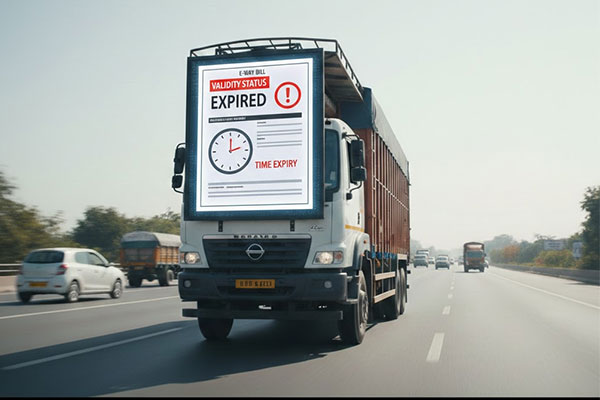
An E way bill expired penalty case happens when the “validity period” of your bill ends while the goods are still on the way.
Why does this happen?
- The truck broke down.
- Traffic jams or road closures.
- Natural disasters or strikes.
If the bill expires and the truck is caught, it is treated as “moving goods without a valid document.” The law allows you to extend the E-Way Bill validity 8 hours before or 8 hours after it expires. If you missed this window, you need a professional to explain the “genuine hardship” to the officer to avoid the heavy 200% penalty.
Demand, Defence, Confiscation, and Minor Errors

E way bill demand case
An E way bill demand case starts when the government officially asks you to pay tax and penalties because of an error found during transit. The officer “demands” money because they believe the transaction was not recorded correctly to avoid paying GST.
In a demand case, the officer will issue a summary of the order. This is a serious matter because if you don’t respond or pay, the demand stays on your GST portal as a liability. We help businesses reply to these demands by showing that the taxes were already paid or that the error was purely accidental and not a way to steal tax.
E way bill penalty defence
When you are caught in a sticky situation with GST authorities, you need a strong E way bill penalty defence. This is your legal “shield.” You have the right to explain your side of the story before paying any fine.
A good defense focuses on:
- The Intent: Proving that you had no plan to hide taxes.
- The Error: Showing that the mistake was minor (like a spelling error).
- The Law: Pointing out that the officer might be charging a higher penalty than what the law allows.
Using the right words in your reply can save you lakhs of rupees. We specialize in drafting these defenses to protect your hard-earned money.


E way bill confiscation case
An E way bill confiscation case is the most serious level of trouble. While “detention” is temporary, “confiscation” means the government is taking full ownership of your goods and vehicle because they believe a major fraud has happened.
This usually happens if:
- The goods are moved without any bill at all.
- The person sending or receiving the goods doesn’t exist (fake GST numbers).
- The owner does not come forward to pay the penalty within the given time (usually 15 days).
In a confiscation case, the government can even sell your goods in an auction. You must act immediately to stop this process and get your property back.
Minor mistake e way bill penalty
The government has issued circulars stating that a minor mistake e way bill penalty should only be ₹1,000 (₹500 CGST + ₹500 SGST). You should not have to pay 200% tax for a small error.
What counts as a minor mistake?
- Spelling mistakes in the name of the sender or receiver (if the GSTIN is correct).
- Errors in the address (if the Pin Code and rest of the details are correct).
- A 1 or 2-digit error in the document number.
- Small errors in the HSN code (if the tax rate is the same).
If an officer is demanding a huge amount for these tiny errors, you have the right to fight back.

Typographical error in e way bill penalty
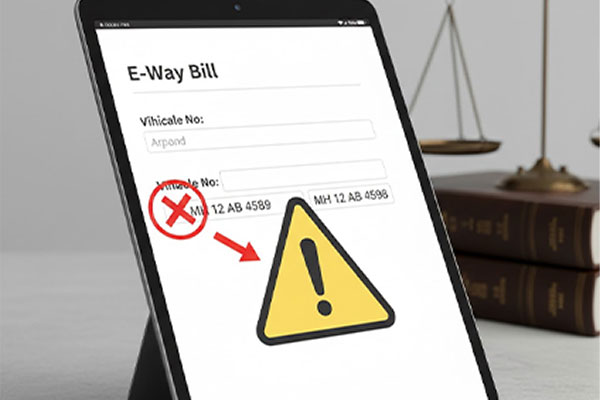
A typographical error in e way bill penalty case is very similar to a minor mistake. It refers specifically to “typing errors.” For example, typing “9928” instead of “9982” for a vehicle number.
Since the E-Way Bill portal is digital, one wrong keypress can lead to a legal notice. We help businesses prove that these were clerical errors and not a plan to evade tax.
Comparing Different Scenarios
Common E-Way Bill Mistakes vs. Penalty Risk
| Mistake Type | Risk Level | Possible Penalty |
|---|---|---|
| No E-Way Bill at all | Very High | 200% of Tax Amount |
| Expired E-Way Bill | High | 200% of Tax Amount (Unless extended) |
| Wrong Vehicle Number | Medium | Variable (Can be reduced to ₹1,000) |
| Typing error in Address | Low | ₹1,000 (Minor Error) |
| Wrong HSN (Same Tax Rate) | Low | ₹1,000 (Minor Error) |
Minor Mistake vs. Major Violation
| Feature | Minor Mistake | Major Violation |
|---|---|---|
| Intent | Accidental / Clerical | Intentional tax evasion |
| Documents | Invoice and E-Way Bill exist | Missing documents |
| Penalty | ₹1,000 (Fixed) | 200% of Tax |
| Example | Spelling error in City name | Using a fake GST number |
With E-Way Bill vs. Without E-Way Bill
| Detail | Movement With E-Way Bill | Movement Without E-Way Bill |
|---|---|---|
| Legal Status | Fully Compliant | Illegal / High Risk |
| Officer View | Generally trusted | Viewed as tax theft |
| Action if Stopped | Routine check | Immediate detention of goods |
| Ease of Release | Very fast | Requires long legal process |
What Happens When Your Goods are Detained?
If an officer stops your vehicle, here is the usual process:
- The Stop: The officer intercepts the vehicle and asks for the E-Way Bill and Invoice.
- Verification: The officer checks if the goods in the truck match the description on the paper.
- The Statement: The officer records a statement from the driver (Form GST MOV-01).
- Physical Verification: If suspicious, the officer takes the truck to a safe place for a full count (Form GST MOV-04).
- The Detention Order: An official order is issued (Form GST MOV-06) saying the goods cannot move.
- The Notice: A notice (Form GST MOV-07) is issued stating the tax and penalty amount.
- The Payment/Reply: You can either pay the fine or file a reply to fight the notice.
- Release Order: Once the officer is satisfied (after payment or valid explanation), a release order (Form GST MOV-05) is issued.
Know Your Rights
Rights of the Taxpayer
Many business owners get scared when they see a GST officer. Remember, you have rights:
- Right to be Heard: The officer cannot fine you without giving you a chance to explain.
- Right to a Copy: You must get a copy of every document the officer signs.
- Time Limit: Verification must be done quickly; they cannot keep your truck parked for days without a valid reason.
- Appeal: If you feel the officer’s order is wrong, you can go to a higher authority (Appellate Authority).
Defence Strategy
How to Build a Strong E-Way Bill Penalty Defence
When we represent a client, we focus on these four pillars:
1. Proving “No Loss to Revenue”
If the tax was already paid on the invoice and the GSTR-1 was filed, we show the court that the government didn’t lose any money. If there is no loss of tax, heavy penalties are usually seen as unfair.
2. The Broken Truck Defense
In an E way bill expired penalty case, we gather evidence like repair bills, photos of the breakdown, or letters from the mechanic to prove why the truck was late.
3. The “Clerical Error” Argument
We use government circulars to prove that a typographical error in e way bill penalty should be limited to ₹1,000.
4. Challenging the Calculation
Sometimes officers calculate the penalty on the total value of goods instead of just the tax. We ensure the math is done correctly according to the law.
Support Promise
Why Choose Professional Help for E-Way Bill Issues?
Dealing with E-Way Bill Penalty & Detention Cases is not just about knowing the law; it’s about knowing how to talk to the department. A single wrong statement by a driver or a business owner can make the case much harder to win.
At Jigar Malavaniya & Associates, we act as your bridge to the GST department. We help you:
- Draft professional replies to notices.
- Get your goods and vehicles released in the shortest time possible.
- Save you from paying excessive, unfair penalties.
- Advise your team on how to avoid these mistakes in the future.
Don’t let a small paperwork error stop your business. If your goods are stuck, contact us today for expert guidance.
Trust & Process
Our Core Approach in Detention & Penalty Matters
Focus on intent & facts
We build the defence around no intention to evade tax and correct supporting evidence.
Clerical error protection
We present minor/typographical errors properly so penalty stays limited as per law.
Fast release guidance
We push for lawful release quickly to reduce business and delivery losses.
Correct penalty calculation
We challenge wrong calculations and ensure penalty is computed as per legal provisions.
Frequently Asked Questions
A: Technically, yes. However, you should try to extend the validity on the portal immediately. If you are caught, you can use the breakdown as a defense to avoid the heavy 200% penalty.
A: The officer may detain the vehicle, but according to the law, a typographical error in e way bill penalty should only be ₹1,000 if all other documents are correct.
A: Usually, the owner of the goods is responsible. However, if the owner doesn’t come forward, the transporter might have to handle the legalities to get their vehicle released.
A: If you pay the penalty immediately, it can happen in 24–48 hours. If you decide to fight the case, it may take longer, but you can get the goods released by providing a “Bank Guarantee.”
A: Only in an E way bill confiscation case where you don’t respond or pay the penalty within the time limit. They cannot sell them immediately upon stopping the truck.
A: E-Way Bills are generally for “business” movements. If you are moving personal household items, you usually don’t need an E-Way Bill, but it’s good to have a declaration or a “Delivery Challan.”
A: No. A wrong Pin Code, if the address is otherwise correct, is often considered a minor mistake e way bill penalty case. You should challenge this.
A: An E way bill demand case is when the government creates an official record that you owe them money due to a violation found during the transit of goods.
A: Within the same state (Intra-state), there are some relaxations for short distances from the place of business to the transporter’s office. However, it is always safer to check your specific state’s rules.
A: The driver should always have a physical or digital copy of the Tax Invoice (or Bill of Supply) and a valid E-Way Bill.
Goods Stuck? Protect Your Business with Expert Legal Support
Dealing with E-Way Bill Penalty & Detention Cases is stressful, but you do not have to do it alone. We handle the legal communication, drafting, and case strategy so your goods and vehicle can be released as quickly and lawfully as possible.
Don’t let a small paperwork error stop your business. If your goods are stuck, contact us today for expert guidance.